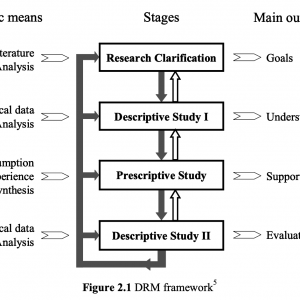
P06 EPD: A Critical Review of the Product Development Process (PDP) #05
The course aims to provide a theoretical reference base for conducting research in product development.
5.0 credits
This much appreciated course will in theory and practice develop the participant’s skill in analyzing and comparing product development and production systems in different countries. Participants will visit Swedish as well as International companies and on a theoretical base, analyse and discuss product development and production from a global perspective.
7.5 credits
This course will enable PhD candidates to: · Describe and analyze the conceptual frameworks necessary to understand the foundations of the CE; · Describe current industrial trends regarding CE; · Based on a system perspective suggest implementation of CE strategies in industry and society and discuss opportunities and barriers in implementation efforts; · Describe and critically review the policy rationale for CE
7,5 credits
The course is centered around organizational learning and learning organizations, the ability to exploit and explore knowledge, competence and capabilities in organizations.
5 credits
The aim of the course is to guide participants through the journal publication process with their own contribution.
7.5 credits
The course aims to provide knowledge about modern technologies in production systems. Different technologies are introduced from the production’s perspective with real-life examples and case studies.
6 credits
The course aims to provide advanced knowledge and hands-on experience in disturbances and variation analysis in manufacturing systems. The scope of the course includes advanced methods in process control, root cause analysis, modeling and impact evaluations of disturbances and variations.
9.0 credits
This course is for you who want to explore the possibilities within the field of metrology and surface characterisation at different stages of development - testing, manufacturing, operation... Practical applications from your own field forms the basis for included course projects.
4 credits
In the course, product platforms are studied from both theoretical and practical perspectives. This includes fundamental concepts together with current research and industrial practise in the area. Different support for planning, developing and analysing product platform design are introduced and practised. The impact on business processes of different platform strategies are discussed as well as their use in different sectors and applications.
7.5 credits
You book the date for the course when you have registered to it. A communication eye opener! It is both necessary and important for researchers in academia and industry to know how to explain complicated research to non-experts.
2.0 credits
You book the date for the course when you have registered to it. The big difference from PM1 is that you will get help from the course leader, as a professional communications coach, with the preparations to make a good performance.
2.0 credits
Research methodology in product realisation is a research supportive course that aims to give students a comprehensive knowledge of various kind of research methods, and in-depth knowledge of the methods that are relevant for the individual student.
7.5 credits
The aim of the course is to prepare doctoral students researching and working on topics in the engineering design area to conduct research work of high scientific quality.
7.5 credits
This course focus on your skills of presenting research to a mixed audience...
2.0 credits
This much appreciated course will in theory and practice develop the participant’s skill in analyzing and comparing product development and production systems in different countries. Participants will visit Swedish as well as International companies and on a theoretical base, analyse and discuss product development and production from a global perspective.
7.5 credits
Theories on inclusive diversity and gender equality and how these can relate to sustainable industry and production and the role of humans in technology.
4 credits
We are happy to announce and invite you to the 10th International Summer School on Industrial Agents: Autonomous Control in logistics, production and energy applications, at Polytechnical University "Haut-de-France" in Valenciennes, France. The International Summer School on Industrial Agents brings together leading researchers and PhD students in the field of agent technology. As a PhD student you will have the opportunity to participate in different workshops, get to know like-minded people from an international community and build valuable relationships in your research field.
6 credits
The aim of the course is to increase participants understanding of production systems and to be able to make knowledgeable decisions within the area.
7.5 credits
The course aims to provide advanced knowledge and hands-on experience in disturbances and variation analysis in manufacturing systems. The scope of the course includes advanced methods in process control, root cause analysis, modeling and impact evaluations of disturbances and variations.
9.0 credits
This course will enable PhD candidates to: · Describe and analyze the conceptual frameworks necessary to understand the foundations of the CE; · Describe current industrial trends regarding CE; · Based on a system perspective suggest implementation of CE strategies in industry and society and discuss opportunities and barriers in implementation efforts; · Describe and critically review the policy rationale for CE
7,5 credits
The course aims to introduce principles of multidisciplinary design optimization (MDO). Theory will be presented by means of examples to demonstrate its application so that practitioners can learn how to apply them on their own problems.
3.0 credits
For the 7th time, PAD 2024 brings together international young researchers and postgraduate students who are currently conducting research in methodological product development with a focus on product architectures and modularity. The week is filled with practical workshops to apply parts of completed development methods. The interactive format guides you through the sessions and provides space for discussions and exchange.
The course is centred around the INCOSE Systems Engineering Handbook and is run as a study circle and will give an introduction to the area of systems engineering.
3 credits
The aim of the course is to increase participants understanding of key concepts, and to develop their competence and skills in how to perform qualitative analysis. The participants will develop an ability to judge and evaluate the choice of analytical method applied to an adequate set of empirical data. Furthermore, the course aims at increasing the participants’ understanding of the premises for publishing results based on qualitative data analysis in scientific journals.
7.5 credits
The aim of the course is to prepare doctoral students researching and working on topics in the engineering design area to conduct research work of high scientific quality.
7.5 credits
The aim of the course is to guide participants through the journal publication process with their own contribution.
7.5 credits
Aerospace is an interdisciplinary and highly innovative engineering field with huge potential for sustainable business. In this course, you design and execute cross-disciplinary and collaborative research propositions. You learn to pitch and match your research competence to different audiences.
4-7,5 HEC credits
Today a researcher not only needs to address the important scientific questions. A researcher should also be able to have a wider perspective on the utilization of research results and their benefits for society. This course will help you as PhD student to put your research project into a wider context, and give you insights into the processes for innovation and creativity.
4 credits
The course provides insight into the area of Trend spotting including training in trend spotting related to ongoing research where industrial and societal outlooks serve as a platform for the course content.
7.5 credits
Societal and industrial activities call for a need to relate research and practice on Engineering Product Development to the pressing issues of sustainable development. In this course, we will address how various sustainability aspects relate to Engineering Product Development and focus on why, how and when sustainability needs to be integrated and implemented in the product development activities.
5.0 credits
This course aims at facilitating the participant to learn the interplays between different areas relevant to Circular Economy - business model, governmental policy, product/service design, user behaviour, and supply chain management. The course will also support the participant to carry out and reflect upon his/her research with a transdisciplinary approach.
2 credits
The course aims to provide a basic understanding for how modelling, simulation and optimization can be employed to support the engineering product development process.
5.0 credits
The course provides insight into the area of Trend spotting including training in trend spotting related to ongoing research where industrial and societal outlooks serve as a platform for the course content.
7.5 credits
The course aims to provide a basic understanding and knowledge of research in engineering management of product development in industrial contexts.
5.0 credits
We are happy to announce and invite you to the 9th International Summer School on Industrial Agents: Autonomous Control in logistics, production and energy applications, at Polytechnical University "Haut-de-France" in Valenciennes, France. The International Summer School on Industrial Agents brings together leading researchers and PhD students in the field of agent technology. As a PhD student you will have the opportunity to participate in different workshops, get to know like-minded people from an international community and build valuable relationships in your research field.
6 credits
This course will enable PhD candidates to: · Describe and analyze the conceptual frameworks necessary to understand the foundations of the CE; · Describe current industrial trends regarding CE; · Based on a system perspective suggest implementation of CE strategies in industry and society and discuss opportunities and barriers in implementation efforts; · Describe and critically review the policy rationale for CE
7,5 credits
The course aims to provide a basic understanding of hard facing technology in a hard faced component life cycle, from order, design, manufacture, deposition, tribo-performance assessment, service life and end of life (refurbishing/recycling/discarding).
5 credits
This course puts the concept of optimal design on a rigorous foundation and demonstrates the intimate relationship between the mathematical model that describes a design and the solution methods that optimize it.
4 credits
The aim of the course is to guide participants through the journal publication process with their own contribution.
7.5 credits
The course gives an overview of United Nations Development Program’s (UNDP’s) Sustainable Development Goals (SDGs), and tools to assess and develop towards increased sustainability for aerospace applications research and development and innovation (R&D, R&I) projects.
4 credits
The course provides insight into production challenges and innovative production solutions at a large number of manufacturing companies that serve as inspiration and live cases (e.g. SSAB, Sandvik, Gnosjö companies).
7.5 credits

The course aims to provide a theoretical reference base for conducting research in product development.
5.0 credits
The course aims to increase awareness regarding sustainability by addressing a life-cycle perspective of sustainability in general and in specifics from three aspects, social, environmental and economic viewpoints within the core research area of each participant. Performing effective sustainability research will lead to sustainable development!
4.0 credits
This course aims at facilitating the participant to learn the interplays between different areas relevant to Circular Economy - business model, governmental policy, product/service design, user behaviour, and supply chain management. The course will also support the participant to carry out and reflect upon his/her research with a transdisciplinary approach.
2 credits
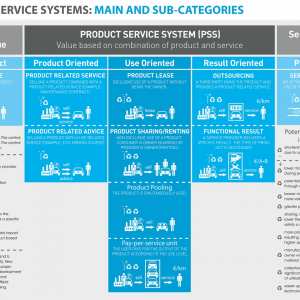
The course aims to provide an overview of Product-Service System (PSS), which is an innovation and production strategy focused on servitization, where value is created through a shift from selling a product to offering total customer solutions. PSS are appealing both from an economic and societal perspective, mainly as a means to better fulfil customer demands, be competitive in dynamic markets and meet sustainability targets.
7,5 credits
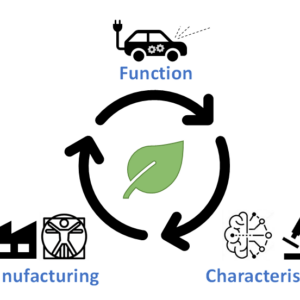
The course focuses on the relation among manufacturing, metrology/characterization and function of various engineering surfaces.
4 credits
Research methodology in product realisation is a research supportive course that aims to give students a comprehensive knowledge of various kind of research methods, and in-depth knowledge of the methods that are relevant for the individual student.
7.5 credits
This course gives the participants an overview of and a common knowledge base in the areas of research of Produktion2030, with an emphasis on industrial product development and production. Teachers are recruited from participating academic institutions and collaborating industrial partners for each run of the course.
4 credits
The course provides insight into the area of Trend spotting including training in trend spotting related to ongoing research where industrial and societal outlooks serve as a platform for the course content.
7.5 credits
Societal and industrial activities call for a need to relate research and practice on Engineering Product Development to the pressing issues of sustainable development. In this course, we will address how various sustainability aspects relate to Engineering Product Development and focus on why, how and when sustainability needs to be integrated and implemented in the product development activities.
5.0 credits
The course is targeted at professionals and doctoral students who want to attain a deeper understanding of machining processes. Through better understanding of today’s forefront of machining research the participants will be better suited to both implement and contribute to the continued development of the field of machining processes.
7.5 credits
Manual work affects virtually all times used in industry, even if machines are producing the goods, people are needed to keep the machines running. The importance of these manual activities is often neglected, for example set-up time is often regarded as a constant for a specific machine regardless product type changed to or from.
3 credits
The aim of the course is to increase participants understanding of production systems and to be able to make knowledgeable decisions within the area.
7.5 credits
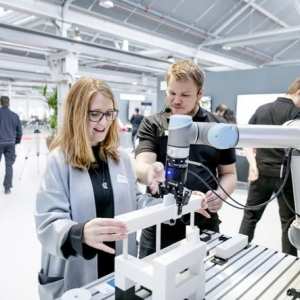
The course aims to give knowledge of how virtual tools can be used as a mean to successfully realize industrial human-robot collaboration. The course also aims to give the participants knowledge in how a human-robot development project can be undertaken, considering critical aspects such as efficiency, safety and ergonomics.
5.0 credits
The course aims to provide an overview of Product-Service System (PSS), which is an innovation and production strategy focused on servitization, where value is created through a shift from selling a product to offering total customer solutions. PSS are appealing both from an economic and societal perspective, mainly as a means to better fulfil customer demands, be competitive in dynamic markets and meet sustainability targets.
7,5 credits
The course aims to introduce principles of multidisciplinary design optimization (MDO). Theory will be presented by means of examples to demonstrate its application so that practitioners can learn how to apply them on their own problems.
3.0 credits
For the 6th time, PAD 2022 brings together international young researchers and postgraduate students who are currently conducting research in methodological product development with a focus on product architectures and modularity. The week is filled with practical workshops to apply parts of completed development methods. The interactive format guides you through the sessions and provides space for discussions and exchange.
The aim of the course is to increase participants understanding of key concepts, and to develop their competence and skills in how to perform qualitative analysis. The participants will develop an ability to judge and evaluate the choice of analytical method applied to an adequate set of empirical data. Furthermore, the course aims at increasing the participants’ understanding of the premises for publishing results based on qualitative data analysis in scientific journals.
7.5 credits
The aim of the course is to guide participants through the journal publication process with their own contribution.
7.5 credits
The course provides insight into production challenges and innovative production solutions at a large number of manufacturing companies that serve as inspiration and live cases (e.g. SSAB, Sandvik, Gnosjö companies).
7.5 credits

The course aims to provide knowledge about modern technologies in production systems. Different technologies are introduced from the production’s perspective with real-life examples and case studies.
6 credits
We are happy to announce and invite you to the 8th International Summer School on Industrial Agents: Autonomous Control in logistics, production and energy applications, organized by the Helmut Schmidt University, Institute for Automation Technology in Hamburg. The summer school will take place from 11th to 15th July 2022. The International Summer School on Industrial Agents brings together leading researchers and PhD students in the field of agent technology. As a PhD student you will have the opportunity to participate in different workshops, get to know like-minded people from an international community and build valuable relationships in your research field.
6 credits
The course aims to provide advanced knowledge and hands-on experience in disturbances and variation analysis in manufacturing systems. The scope of the course includes advanced methods in process control, root cause analysis, modeling and impact evaluations of disturbances and variations.
9.0 credits
This course aims at facilitating the participant to learn the interplays between different areas relevant to Circular Economy - business model, governmental policy, product/service design, user behaviour, and supply chain management. The course will also support the participant to carry out and reflect upon his/her research with a transdisciplinary approach.
2 credits
The course aims to provide a basic understanding for how modelling, simulation and optimization can be employed to support the engineering product development process.
5.0 credits
In the course, product platforms are studied from both theoretical and practical perspectives. This includes fundamental concepts together with current research and industrial practise in the area. Different support for planning, developing and analysing product platform design are introduced and practised. The impact on business processes of different platform strategies are discussed as well as their use in different sectors and applications.
7.5 credits
The course is centred around the INCOSE Systems Engineering Handbook and is run as a study circle and will give an introduction to the area of systems engineering.
3 credits
The aim of the course is to prepare doctoral students researching and working on topics in the engineering design area to conduct research work of high scientific quality.
7.5 credits
Welcome to a PhD and practitioners course where product development methods and product innovations for aerospace applications will be explored, in terms of scientific research in the field, combined with practical examples. Aerospace applications currently in use will be studied along the course, as well as future visionary aerospace innovation solutions. Participants can develop their own product ideas along the course.
7,5 credits
Societal and industrial activities call for a need to relate research and practice on Engineering Product Development to the pressing issues of sustainable development. In this course, we will address how various sustainability aspects relate to Engineering Product Development and focus on why, how and when sustainability needs to be integrated and implemented in the product development activities.
5.0 credits
The course is targeted at professionals and doctoral students who want to attain a deeper understanding of machining processes. Through better understanding of today’s forefront of machining research the participants will be better suited to both implement and contribute to the continued development of the field of machining processes.
7.5 credits
It is our pleasure to invite you to participate in the 7th International Summer School on Industrial Agents: Embedded Intelligence within the Edge and Fog Computing, organized by UNINOVA - Center of Technology and Systems (CTS), which will take place online, on 21-25th of June 2021. The Summer School is technically co-sponsored by RICS - Robotics and Industrial Complex Systems from UNINOVA-CTS (Portugal). This event is designed to provide advanced training for PhD students and practitioners on the advanced and smart automation technologies that will be the basis for Industry 4.0, aiming to promote the discussion on how to use multi-agent systems to design, develop and implement the next generation of intelligent production system based on their cyber-physical formulation.
6 credits
The course aims to strengthen the understanding of the important link between technology and economy.
7.5 credits
The course aims to provide advanced knowledge and hands-on experience in disturbances and variation analysis in manufacturing systems. The scope of the course includes advanced methods in process control, root cause analysis, modeling and impact evaluations of disturbances and variations.
9.0 credits
This course will enable PhD candidates to: · Describe and analyze the conceptual frameworks necessary to understand the foundations of the CE; · Describe current industrial trends regarding CE; · Based on a system perspective suggest implementation of CE strategies in industry and society and discuss opportunities and barriers in implementation efforts; · Describe and critically review the policy rationale for CE
7,5 credits
This course puts the concept of optimal design on a rigorous foundation and demonstrates the intimate relationship between the mathematical model that describes a design and the solution methods that optimize it.
4 credits
You will be contacted by the course provider to book the date (from Feb. 2021) for the course when you have registered to it. This is a wake up call for communication. The course gives you tools to be well prepared for communicating your research to non experts. We use an interview and camera to test your skills. This knowledge is useful in all communication, such as trying to convince financiers and/or companies about your project. But also for preparing presentations, interviews in media or teaching. To get a professional message bank in a concrete research project we recommend the advanced course - step two.
2.0 credits
You book the date (from Feb. 2021) for the course when you have registered to it. Take the chance to sharpen your communication skills to be more convincing and successful in trying to reach different target groups, especially non-experts, with your research.
2.0 credits
The course aims to provide a basic understanding of scientific dissemination, knowledge sharing based on research, and applied insight in how scientific events are communicated and disseminated.
5.0 credits
The aim of the course is to guide participants through the journal publication process with their own contribution.
7.5 credits
This much appreciated course will in theory and practice develop the participant’s skill in analyzing and comparing product development and production systems in different countries. Participants will visit Swedish as well as International companies and on a theoretical base, analyse and discuss product development and production from a global perspective.
7.5 credits
The course aims to increase awareness regarding sustainability by addressing a life-cycle perspective of sustainability in general and in specifics from three aspects, social, environmental and economic viewpoints within the core research area of each participant. Performing effective sustainability research will lead to sustainable development!
4.0 credits
This course aims at facilitating the participant to learn the interplays between different areas relevant to Circular Economy - business model, governmental policy, product/service design, user behaviour, and supply chain management. The course will also support the participant to carry out and reflect upon his/her research with a transdisciplinary approach.
2 credits
This course is for you who want to explore the possibilities within the field of metrology and surface characterisation at different stages of development - testing, manufacturing, operation... Practical applications from your own field forms the basis for included course projects.
4 credits
Research methodology in product realisation is a research supportive course that aims to give students a comprehensive knowledge of various kind of research methods, and in-depth knowledge of the methods that are relevant for the individual student.
7.5 credits
The aim of the course is to prepare doctoral students researching and working on topics in the engineering design area to conduct research work of high scientific quality.
7.5 credits
The 6th International Summer School on Industrial Agents is designed to provide advanced training for PhD students and practitioners on engineering methods and automation technologies that will be the basis for Industry 4.0. This week long intensive course aims to promote discussion on how to use distributed multi-agent systems to design, develop and implement the next generation of intelligent production system based on the principles of cyber-physical systems.
6 credits
The course aims to give knowledge of how virtual tools can be used as a mean to successfully realize industrial human-robot collaboration. The course also aims to give the participants knowledge in how a human-robot development project can be undertaken, considering critical aspects such as efficiency, safety and ergonomics.
5.0 credits
The course aims to provide a basic understanding for how modelling, simulation and optimization can be employed to support the engineering product development process.
5.0 credits
PAD 2020 - The 6th International Summer School on Product Architecture Design will bring together international young scientists and post‐graduate students who are currently doing research in the field of methodical product development with focus on product architectures and modularity. The week is filled with practical workshops to apply parts of the presented development methods. The interactive format guides you through the sessions and gives space for discussions and exchange.
This is a wake up call for communication. The course gives you tools to be well prepared for communicating your research to non experts. We use an interview and camera to test your skills. This knowledge is useful in all communication, such as trying to convince financiers and/or companies about your project. But also for preparing presentations, interviews in media or teaching. To get a professional message bank in a concrete research project we recommend the advanced course - step two.
2.0 credits
The aim of the course is to prepare doctoral students researching and working on topics in the engineering design area to conduct research work of high scientific quality.
7.5 credits
The aim of the course is to guide participants through the journal publication process with their own contribution.
7.5 credits
The course provides insight into production challenges and innovative production solutions at a large number of manufacturing companies that serve as inspiration and live cases (e.g. SSAB, Sandvik, Gnosjö companies).
7.5 credits

New dates! This much appreciated course will in theory and practice develop the participant’s skill in analyzing and comparing productdevelopment and production systems in different countries. Participants will visit Swedish as well as International companies and on a theoretical base, analyse and discuss product development and production from a global perspective.
7.5 credits
The course aims to provide knowledge about modern technologies in production systems. Different technologies are introduced from the production’s perspective with real-life examples and case studies.
6 credits
This course aims at facilitating the participant to learn the interplays between different areas relevant to Circular Economy - business model, governmental policy, product/service design, user behaviour, and supply chain management. The course will also support the participant to carry out and reflect upon his/her research with a transdisciplinary approach.
2 credits
New dates! The course is centred around the INCOSE Systems Engineering Handbook and is run as a study circle and will give an introduction to the area of systems engineering.
3 credits
You book the date (Aug. to Oct. 2020) for the course when you have registered to it. This is a wake up call for communication. The course gives you tools to be well prepared for communicating your research to non experts. We use an interview and camera to test your skills. This knowledge is useful in all communication, such as trying to convince financiers and/or companies about your project. But also for preparing presentations, interviews in media or teaching. To get a professional message bank in a concrete research project we recommend the advanced course - step two.
2.0 credits
The aim of the course is to increase participants understanding of key concepts, and to develop their competence and skills in how to perform qualitative analysis. The participants will develop an ability to judge and evaluate the choice of analytical method applied to an adequate set of empirical data. Furthermore, the course aims at increasing the participants’ understanding of the premises for publishing results based on qualitative data analysis in scientific journals.
7.5 credits

Participants is offered an advanced course in how to communicate research.
2.0 credits
You book the date (Aug. to Oct. 2020) for the course when you have registered to it. Take the chance to sharpen your communication skills to be more convincing and successful in trying to reach different target groups, especially non-experts, with your research.
2.0 credits